Horse Blanket Sizing Guide: A Comprehensive Overview (Updated 04/22/2026)
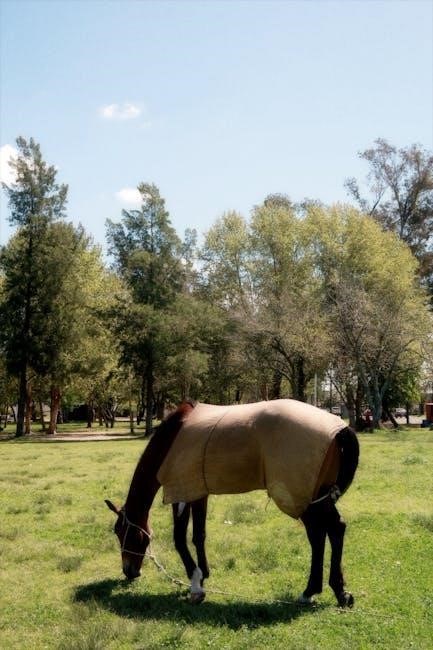
Maintaining your horse’s comfort throughout changing seasons often necessitates using horse rugs. Proper rugging is crucial for warmth, and selecting the correct size is paramount for optimal well-being.
Understanding the Importance of Proper Blanket Fit
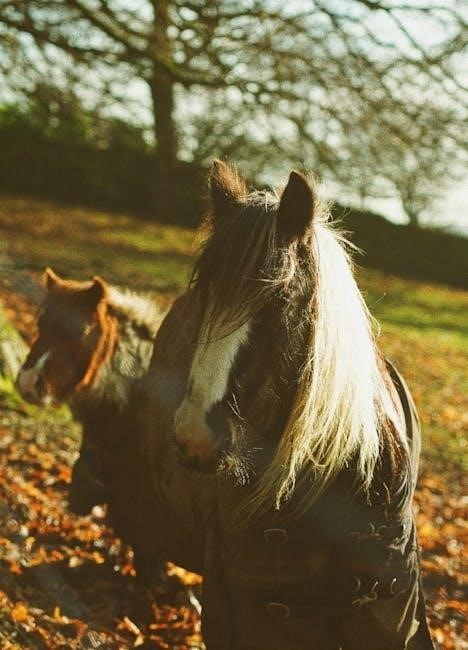
A correctly fitted horse blanket is far more than just keeping your equine companion warm; it’s fundamental to their overall health and comfort. A well-fitting blanket allows for a full range of motion, preventing restriction during movement in the pasture or stable. It avoids rubbing and pressure points that can lead to sores and discomfort, especially during extended wear.
Conversely, a blanket that’s too tight can restrict breathing and cause painful chafing. One that’s too loose presents a significant safety hazard – the horse could become entangled in the blanket, potentially leading to injury or even panic. Proper fit ensures the blanket stays securely in place without hindering natural behaviors like rolling or scratching. Ultimately, prioritizing a good fit demonstrates responsible horse ownership and contributes to a happier, healthier animal.
Why Accurate Sizing Matters
Accurate blanket sizing directly impacts a horse’s ability to regulate its body temperature effectively. A blanket that’s the correct size provides optimal insulation during cold weather, preventing chilling and reducing the energy expenditure required to stay warm. This is particularly crucial for horses with limited natural fat cover, older horses, or those recovering from illness.
Beyond temperature regulation, precise sizing prevents interference with the horse’s natural movements. Ill-fitting blankets can rub sensitive areas like the withers, chest, and legs, causing discomfort and potentially leading to skin irritation or even more serious wounds. Correct sizing also ensures the blanket remains securely positioned, minimizing the risk of it shifting, twisting, or becoming dislodged – especially important in windy conditions or during active turnout. Investing time in accurate measurement translates to a more comfortable and safer experience for your horse.
Consequences of Incorrect Blanket Size
An improperly sized horse blanket can lead to a multitude of problems, impacting your horse’s health and well-being. A blanket that is too small restricts movement, causing chafing and pressure sores, particularly over the withers and shoulders. This discomfort can manifest as behavioral changes, such as reluctance to move freely or even aggression.
Conversely, a blanket that is too large poses its own risks. It can easily slip to the side, reducing its effectiveness and potentially becoming tangled around the horse’s legs, creating a dangerous situation. Excessive material can also lead to overheating, especially during milder weather, disrupting the horse’s natural thermoregulation. Furthermore, a poorly fitted blanket offers inadequate protection from the elements, defeating its purpose. Regularly checking the fit and addressing sizing issues promptly is vital to prevent these complications and ensure your horse remains comfortable and safe.
Measuring Your Horse for a Blanket
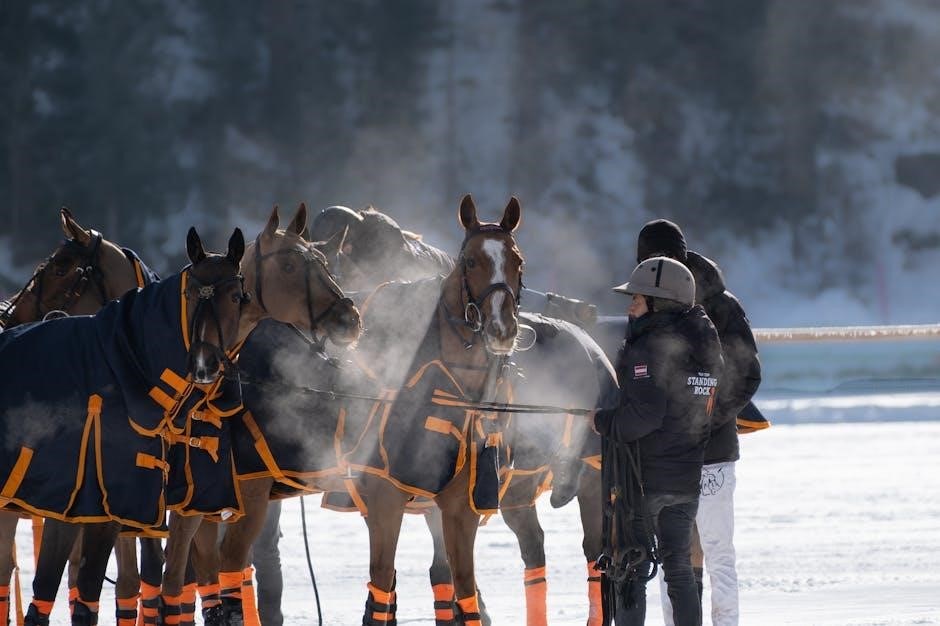
Accurate measurements are the foundation of a comfortable and effective blanket fit. This process ensures the rug provides optimal protection without restricting movement or causing discomfort.
Tools You’ll Need for Accurate Measurement
Embarking on accurate blanket sizing requires a few essential tools. A flexible measuring tape is paramount; a fabric or fiberglass tape is preferable to a metal one, as it conforms better to your horse’s body contours. Ensure the tape measure is long enough – at least 57 inches (145 cm) is recommended – to comfortably measure from withers to tail.
A helper can be incredibly beneficial, especially for horses who are sensitive or fidgety during measurement. Having someone to calmly hold the horse and keep them still will significantly improve accuracy. A calm and quiet environment is also crucial. Avoid distractions and ensure the horse is relaxed before beginning.
While not strictly necessary, a friend to assist with holding the tape in place, particularly during the girth measurement, can be extremely helpful. Finally, a notepad and pen are useful for recording your measurements immediately to avoid errors or forgetting crucial details. Precision is key to a well-fitting blanket!
Step 1: Measuring from Withers to Tail
Begin by positioning your horse squarely and comfortably. Place the end of the measuring tape at the highest point of the withers – the ridge between the shoulder blades. Ensure the tape runs in a straight line down the center of the horse’s back, following the natural curve of their spine, all the way to the base of the tail.
It’s vital to maintain a straight line; avoid dipping the tape down the sides of the horse. If your horse has a sloping topline, measure from the withers to where the topline would be if it were level. Record this measurement in inches or centimeters – consistency is important! This length determines the primary blanket size.
Double-check your measurement to ensure accuracy. A slight error here can lead to a poorly fitting blanket. It’s often helpful to have a second person verify the measurement for added confidence. This initial measurement is the foundation for selecting the correct blanket size.
Step 2: Measuring the Girth
To accurately measure your horse’s girth, position the measuring tape around the widest part of the chest, typically just behind the front legs. Ensure the tape is snug but not overly tight – you should be able to comfortably slide a finger or two underneath it. The tape should run parallel to the ground.
Wrap the tape around the body, ensuring it doesn’t twist or ride up into the armpit. Record this measurement in inches or centimeters, maintaining consistency with your withers-to-tail measurement. This girth measurement is crucial for blankets with belly bands or surcingles, influencing how securely the blanket stays in place.
For horses with particularly broad chests, or those prone to rubbing, a slightly looser girth measurement might be preferable. Always consider your horse’s individual conformation when taking this measurement. Accurate girth measurement prevents chafing and ensures a comfortable, secure fit.
Step 3: Determining Blanket Size Based on Measurements
Once you have both the withers-to-tail length and girth measurement, you can determine the appropriate blanket size. Generally, blanket sizes range from 48 inches to 84 inches or higher, corresponding to the length measurement. Consult the specific sizing chart provided by the blanket manufacturer, as variations exist between brands.
If your horse falls between sizes, it’s often better to size up. A slightly larger blanket can be adjusted with surcingles and leg straps, while a blanket that’s too small will restrict movement and cause discomfort. Consider the blanket’s intended use; turnout blankets may require a looser fit than stable blankets.
Remember to cross-reference your measurements with both North American and European sizing systems if applicable. Prioritize a comfortable fit that allows for freedom of movement and prevents rubbing, ensuring your horse’s well-being during all weather conditions.
Standard Blanket Sizing Systems
Blanket sizing isn’t universal; North American systems use inches, while European systems utilize centimeters. Understanding these differences is vital for accurate fit and optimal horse comfort.
North American Sizing (in Inches)
In North America, horse blanket sizes are traditionally measured in inches, typically ranging from 68 inches to 84 inches and beyond, in two-inch increments. This measurement refers to the blanket’s length, taken from the center of the chest to the base of the tail. A 72-inch blanket is a very common size for many average-sized horses.
However, length isn’t the only factor. Girth measurement is equally important, ensuring the blanket doesn’t rub or become too tight. Standard girth sizes generally correspond to the blanket size, but variations exist. It’s crucial to consult specific brand sizing charts, as they can differ slightly.
Here’s a general guideline:
- 68-70 inches: Ponies and small horses
- 72-74 inches: Average-sized horses (14.2 – 15.2 hands)
- 76-78 inches: Larger horses (15.3 – 16.2 hands)
- 80-84 inches: Very large horses and draft breeds
Always prioritize a snug but not restrictive fit, allowing for movement without posing a risk of the blanket slipping or causing rubs.
European/Metric Sizing (in Centimeters)
In Europe and many other regions, horse blanket sizing utilizes the metric system, measured in centimeters. This system typically ranges from 198 cm to 230 cm or larger, also often in increments of approximately 5-10 cm. Understanding this conversion is vital when purchasing blankets internationally or from European brands.
Similar to North American sizing, the measurement represents the blanket’s length from chest to tail. However, European sizing often considers the horse’s height in hands alongside the centimeter measurement for a more precise fit. Girth measurements remain crucial, and brand-specific charts should always be consulted.
Here’s a general conversion and guideline:
- 198-208 cm: Ponies and small horses (under 14.2hh)
- 213-223 cm: Average horses (14.2 – 16hh)
- 228-238 cm: Larger horses and warmbloods (16 – 17hh)
- 243+ cm: Draft breeds and very large horses
Ensure the blanket allows for comfortable movement and doesn’t restrict the horse’s shoulders or gait. A properly fitted blanket is essential for both warmth and safety.
Understanding Blanket Length Variations
Blanket length isn’t always a strict measurement; variations exist between manufacturers and blanket styles. Some brands run “true to size,” while others may be slightly longer or shorter than indicated by the stated measurement. This is why relying solely on inches or centimeters can be misleading.
Consider the blanket’s design. A blanket with a generous drop front will appear longer, providing greater chest coverage. Conversely, a blanket designed for a higher-necked horse might have a shorter overall length. Different blanket types – turnout, stable, fly sheets – also exhibit length variations based on their intended use.
Always check the brand’s specific sizing chart. Look for details regarding where the length is measured from (e.g., chest to tail, withers to tail). When in doubt, it’s generally better to size up slightly, allowing for adjustments via surcingles and closures, rather than risk a blanket that’s too restrictive.

Types of Horse Blankets and Sizing Considerations
Different blanket types require nuanced sizing approaches. Turnout, stable, fly sheets, and coolers all have unique fits, impacting how you measure and select the appropriate size.
Turnout Blankets: Heavy-Duty Weather Protection
Turnout blankets are designed to withstand rigorous outdoor conditions, demanding a precise fit that balances protection and freedom of movement. These blankets are typically waterproof and durable, often featuring denier ratings indicating fabric strength. When sizing for a turnout blanket, allow a few extra inches in length to prevent restriction during rolling or active grazing.
Girth measurement is particularly critical for turnout blankets, ensuring a snug but not constricting fit to prevent shifting and exposure. Consider the horse’s shoulder slope; blankets with a contoured design will accommodate this better. Pay attention to the blanket’s front closure – straight, V-front, or T-front – as this impacts how it sits on the chest and shoulders. A properly fitted turnout blanket should allow for a hand’s width of space between the blanket and the horse’s withers to avoid rubbing.
Remember to account for layering. If your horse requires an underlayer for added warmth, size the turnout blanket accordingly to accommodate the extra bulk.
Stable Blankets: Indoor Warmth
Stable blankets prioritize warmth and comfort within the barn environment, differing from turnout blankets in their construction and fit requirements. Typically, stable blankets are lighter weight and don’t require the same level of waterproofing. A snugger fit is generally acceptable for stable blankets, as the horse won’t be rolling extensively.
When measuring for a stable blanket, focus on ensuring it covers the horse’s body adequately without restricting breathing or movement. Shoulder freedom is still important, but a slightly closer fit is permissible. Girth measurement remains crucial to prevent shifting, but a tighter fit isn’t necessary as there’s less risk of the blanket being pulled off.
Consider the horse’s clipping status. Heavily clipped horses will require a warmer stable blanket than those with a full winter coat. Also, observe how the blanket sits at the withers; avoid any pressure points. A well-fitted stable blanket promotes relaxation and maintains a comfortable body temperature indoors.
Fly Sheets: Summer Comfort & Sizing
Fly sheets offer protection from biting insects during warmer months, requiring a fit that allows for airflow while remaining secure. Unlike winter blankets, fly sheets are typically made from breathable mesh materials. Sizing for fly sheets closely mirrors turnout blanket sizing, but consider the material’s stretch.
A proper fit prevents gaps where insects can access the horse’s skin, but avoids rubbing or chafing caused by a too-tight fit. Pay close attention to the shoulder area, ensuring ample room for comfortable movement. The sheet should cover the barrel of the horse adequately, extending to the tailhead.
Look for features like belly bands and leg straps to keep the fly sheet securely in place, especially during grazing or rolling. Some fly sheets offer UV protection as an added benefit. Regularly check the fit, as horses can gain or lose weight throughout the summer, impacting the sheet’s effectiveness and comfort.
Coolers: Post-Exercise & Transition Blankets
Coolers are designed to help horses regulate their temperature after exercise or during fluctuating weather conditions. They prevent chilling and aid in drying sweat, making sizing crucial for effectiveness. Cooler sizing generally aligns with standard blanket sizes, but a slightly looser fit is often preferred to avoid restricting movement.
Consider the cooler’s material when determining size; fleece coolers offer more stretch than woven options. Ensure the cooler extends adequately to cover the horse’s hindquarters and doesn’t pull forward, creating pressure on the shoulders. Proper shoulder room is vital to prevent rubs.
Look for features like cross-surcingles and tail cords to secure the cooler during use. A well-fitted cooler should allow for comfortable breathing and prevent overheating while providing sufficient warmth. Regularly assess the fit, especially during periods of rapid weight change or coat growth.
Special Considerations for Blanket Fit
Individual horse conformation significantly impacts blanket fit. Body condition, age, and unique anatomy require adjustments to standard sizing for optimal comfort and functionality.
Adjusting for Body Condition Score
A horse’s body condition score (BCS) dramatically influences blanket fit. Horses carrying extra weight will require a blanket size up, particularly in the chest and shoulder area, to prevent rubbing and ensure freedom of movement. Conversely, a horse with a lower BCS may need a blanket size down to avoid excessive looseness and potential shifting.
When assessing fit on a horse with a higher BCS, pay close attention to whether the blanket is binding across the withers or causing pressure points on the shoulders. A snug, but not tight, fit is the goal. For leaner horses, ensure the blanket doesn’t slide too far forward, potentially covering the eyes, or become unstable during movement. Regularly check for wrinkles or areas of pressure, adjusting straps as needed. Remember, a BCS change throughout the season may necessitate re-evaluation of the blanket size.
Sizing for Young Horses & Ponies
Foals, yearlings, and ponies present unique sizing challenges. Young horses are still growing, so blankets shouldn’t be fitted too tightly, restricting development. Measure frequently – every few months – and be prepared to upsize as they mature. Ponies, due to their conformation, often require blankets specifically designed for their build, as standard horse blankets may not fit correctly.
Consider a blanket with adjustable closures to accommodate growth spurts. Pay particular attention to length; a blanket that’s too long can be a tripping hazard. For ponies, ensure the blanket doesn’t extend too far down the hindquarters, potentially causing interference. Look for blankets with features like adjustable neck straps and surcingles to fine-tune the fit. Prioritize safety and comfort, allowing for movement and preventing rubbing, especially in rapidly growing youngsters;
Blanket Fit for Horses with Sloping Shoulders
Horses with sloping shoulders often experience fit issues with standard blanket designs. The blanket tends to slide forward, putting pressure on the withers and potentially causing rubs or sores. Choosing a blanket specifically designed for this conformation is crucial. Look for features like a high-neck design and a V-front closure, which allows for greater shoulder freedom.
Consider blankets with extended shoulder gussets, providing extra room and preventing constriction. Ensure the blanket sits well back on the withers, avoiding direct pressure. A properly fitted blanket should allow full range of motion without shifting excessively. Regularly check for rubs, especially during initial use, and adjust the fit as needed. Using a wither protector can also help distribute pressure and prevent discomfort for these horses.
Addressing Blanket Rubs and Pressure Points
Blanket rubs are a common issue, often indicating a poor fit or sensitivity. Regularly inspect your horse for any signs of irritation, particularly along the shoulders, chest, and withers. Pressure points develop where the blanket rubs repeatedly against the skin. Immediate action is vital to prevent sores.
First, reassess the blanket’s fit – is it too tight, too loose, or incorrectly positioned? Consider using a wither protector to cushion the withers. Smooth blanket liners and well-placed padding can minimize friction. Ensure buckles and straps aren’t overly tight. If rubs persist, consult a veterinarian or equine professional to rule out underlying skin conditions. Switching blanket materials or brands might also be necessary to find a better fit and reduce irritation. Consistent monitoring is key!
Blanket Features Affecting Fit
Various blanket design elements significantly impact overall fit and comfort. Neck shape, tail flap style, and closure types all contribute to how well a blanket suits your horse.
Neck Coverage & Design
The neck design of a horse blanket plays a vital role in both fit and freedom of movement. Traditional neck designs offer full coverage, extending further up the neck for added warmth, particularly beneficial for clipped horses or those sensitive to cold. However, these can sometimes restrict shoulder movement.
V-front neck designs are increasingly popular, allowing for a greater range of motion in the shoulder area. This design minimizes pressure on the withers and is often preferred for horses with a pronounced shoulder slope. Some blankets feature detachable neck covers, providing versatility for changing weather conditions – allowing you to add warmth when needed and remove it during milder temperatures.
Consider your horse’s conformation and activity level when choosing neck coverage. A horse that spends a lot of time grazing may benefit from a design that doesn’t impede head movement, while a horse prone to shivering might require more extensive neck coverage.
Tail Flaps & Attachment
The tail flap and its attachment method are often overlooked, yet crucial for blanket fit and preventing drafts. A properly fitted tail flap should extend low enough to cover the top of the tailhead, preventing cold air from entering under the blanket, but not so long as to interfere with the horse’s movement or become a tripping hazard.
Tail flaps come in various designs – standard, extended, and even those with a V-shape for better clearance. Attachment methods include a simple strap, a bungee cord, or a combination of both. Bungee attachments offer more flexibility and reduce the risk of rubbing.
Ensure the tail flap isn’t creating pressure points on the tailbone. Regularly check for any signs of irritation or discomfort. If the flap is too tight or poorly positioned, it can cause tail rubbing and even lead to sores. Adjust the attachment to allow for comfortable tail movement.
Surcingle and Leg Straps
Surcingles and leg straps are vital components for securing a blanket and preventing it from shifting or blowing off, especially in windy conditions. The surcingle, a belly strap, runs underneath the horse and attaches to the blanket at the sides. It should be snug enough to prevent side-to-side movement, but loose enough to allow for comfortable breathing and digestion – typically, you should be able to slide a hand between the surcingle and the horse’s body.
Leg straps attach to the blanket at the rear and loop around the horse’s hind legs. They prevent the blanket from lifting up and back. Ensure leg straps aren’t too tight, as this can restrict movement and cause injury. A good fit allows for a few inches of slack.
Regularly check both the surcingle and leg straps for wear and tear, and adjust as needed to maintain a secure, yet comfortable, fit. Properly adjusted straps contribute significantly to blanket stability and your horse’s safety.
Front Closures: Straight, V-Front, and T-Front
The front closure of a horse blanket significantly impacts fit, particularly around the shoulders and chest. Three primary designs exist: straight-front, V-front, and T-front. Straight-front blankets extend straight down from the neck, suitable for horses with a more upright shoulder conformation. However, they can sometimes rub if the horse has a sloping shoulder.
V-front blankets feature a angled cutaway, designed to provide more clearance over the shoulders, minimizing rubbing for horses with a pronounced slope. T-front blankets offer an even more substantial cutaway, ideal for horses with very sloping shoulders or those prone to rubs;
Choosing the correct front closure is crucial for preventing pressure points and ensuring freedom of movement. Consider your horse’s build and history of rubs when selecting a blanket style. Proper fit in this area is essential for comfort and preventing sores.